
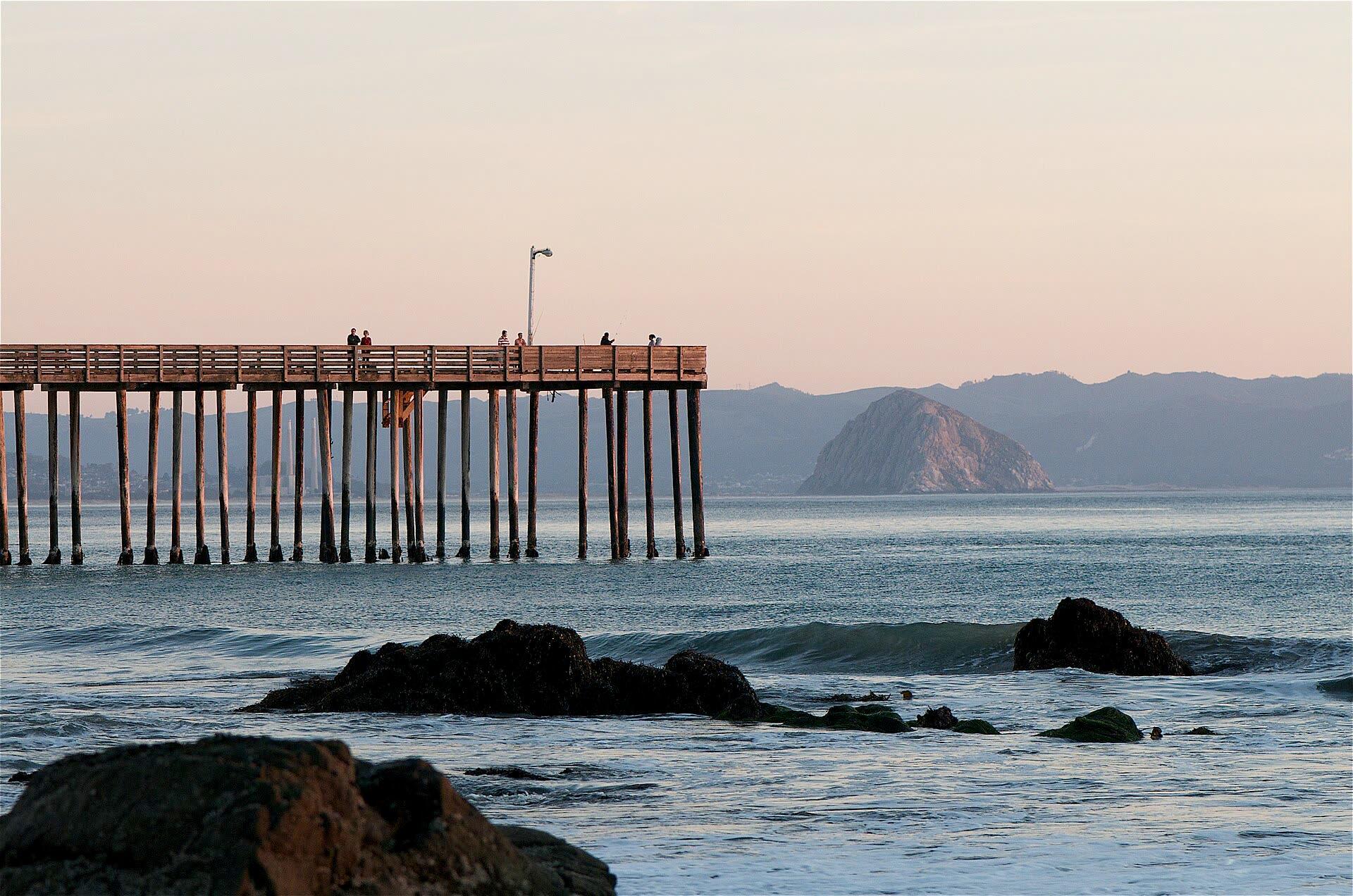
Cayucos
An old pier, a lifeguarded beach and wild bluffs on Estero Bay
About Cayucos
Cayucos uses the tide predictions for San Simeon, the nearest NOAA tide station to the pier and Estero Bluffs (about 33 km up the coast; Port San Luis is about 34 km away). San Simeon gives predicted high and low tides only, with no real-time gauge. The rocky shore north of town is best explored on a low tide, so find the next daylight low on the tide calendar before you go.
Cayucos is a small beach town on the north shore of Estero Bay, a few miles up Highway 1 from Morro Bay, with Morro Rock in view across the water. North of town the coast is undeveloped.
The Cayucos Pier was built in 1872 by Captain James Cass, the town's founder, and rebuilt and lengthened to 982 feet in 1876. It is lit for night fishing, and no fishing license is needed on the pier (catch limits still apply). Winter storms have damaged the end of the pier in recent years and San Luis Obispo County has made emergency repairs, so check for closures before you plan around it.
Stops in and around Cayucos:
- Cayucos State Beach — the sandy beach on both sides of the pier, with lifeguards in peak summer, picnic tables, play equipment, restrooms and outdoor showers.
- Estero Bluffs State Park — low bluffs, sea stacks and tide pools starting about a mile north of town (see below).
Morro Strand State Beach runs south from Cayucos toward Morro Rock. A short drive south is Morro Bay, with sea otters, kayaking and the rock itself; a short drive north on Highway 1 is Cambria, with Moonstone Beach and the Fiscalini Ranch bluffs.
Top Pick: Estero Bluffs State Park
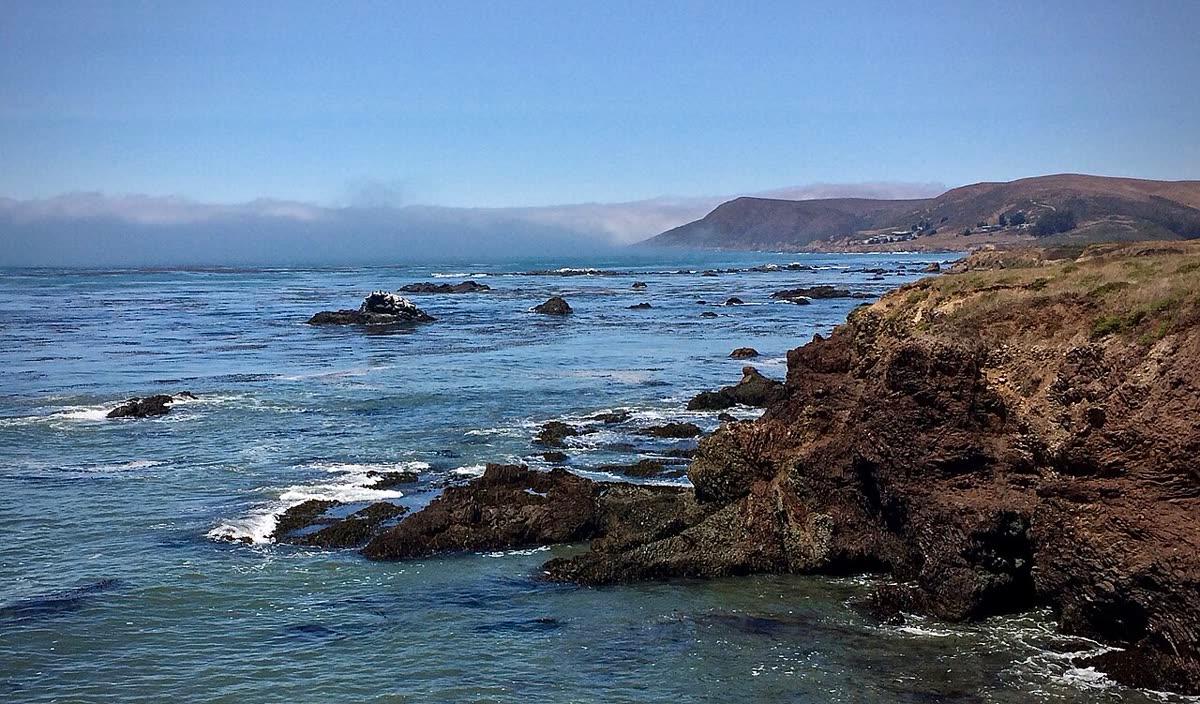
Estero Bluffs State Park starts about a mile north of Cayucos along Highway 1: a former dairy ranch that the Trust for Public Land bought in 2000 and handed to the state in 2002. It has low bluffs, sea stacks, wetlands and rocky reef.
On a low tide the reefs below the bluffs open up for tide pooling. Western snowy plovers nest in the park, so stay off their nesting areas, and keep watching the waves. People also come to kayak, fish, hike and watch birds, and whales pass offshore from December to March.
Open 6 a.m. to sunset, with no restrooms or water. Dogs must be leashed and are allowed only south of San Geronimo Creek; bikes, horses and campfires are not allowed.